Table of Contents
You are tired in a way that sleep does not fix.
Maybe you have been giving everything to everyone and quietly wondering why you feel so empty. Maybe you have been managing your life with precision and efficiency and still feel like something essential is missing. Maybe you look at the relationships around you, the ones that are supposed to matter, and feel a distance you cannot quite name and cannot quite close.
You are not broken. But something is off. And the thing that is off is not your schedule, your job, or the people around you.
It is that we have been practicing the wrong thing.
The Pattern No One Is Naming
Here is what I am watching in my clinical practice and in the culture at large: people are retreating.
Not dramatically. Not all at once. But steadily, quietly. One avoided conversation at a time, one unanswered text, one algorithm-curated feed, one AI chat session instead of a hard phone call. We are choosing frictionless connection over real connection. And the gap between those two things is enormous.
This is the epidemic of isolation. Not the dramatic kind, not the hermit or the recluse. The quiet kind. The kind where you are technically surrounded by people and still deeply alone. The kind where you are reachable at all hours and still never quite reached.
Isolating is a defense. It is not a personality. It is a protection strategy.
When relationships have hurt us, and they have hurt all of us, the nervous system learns to prefer distance. The body learns that closeness means risk. And so we build sophisticated systems for staying connected enough to feel okay while staying distant enough to stay safe.
The technology did not create this pattern. But it made it easier, more comfortable, and much harder to see.
What We Built and What It Cost Us
When researchers and engineers designed the large language models that power today’s AI, they made a series of deliberate choices. They trained them to be helpful, warm, validating, and non-confrontational. They optimized for user satisfaction, which turns out to look a lot like telling people what they want to hear.
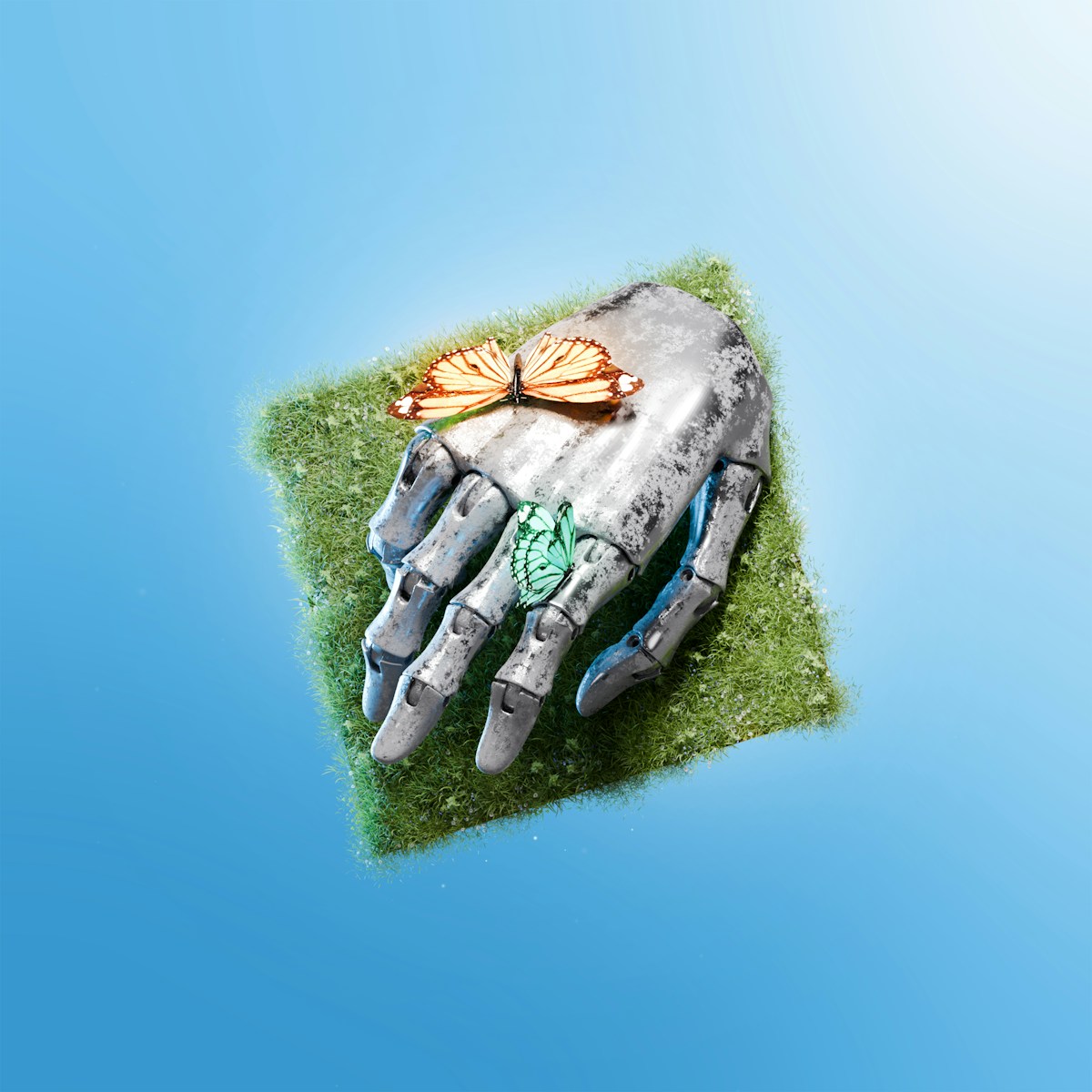
The result is a technology that is extraordinarily good at making you feel understood without the risk of being truly known.
We trained AI to be nice. And in doing so, we accidentally taught ourselves that niceness is what love looks like.
But here is what social media actually tells us about what gets likes: validation and negativity. Not nuance. Not complexity. Not the friend who tells you something true that you did not want to hear. What spreads is the outrage that confirms your worldview, the story that tells you that you are right and they are wrong, the content that says your anger is justified and your pain is someone else’s fault.
And validation about negativity is an addiction in itself. The algorithm feeds it back to you, louder each time, until the world you see through your screen bears almost no resemblance to the world you actually live in. You get pulled deeper into a bubble built entirely of people who agree with you, content that confirms your fears, and a growing sense that everyone on the other side is not just wrong but dangerous.
And then we do something the algorithm could never do on its own: we start curating our actual human relationships the same way. We end connections with real people, people we have known, shared meals with, laughed with, because they do not share every belief, every value, every political position. We have outsourced the logic of the feed into our friendships.
The most important relationship we have is with ourselves. And we have outsourced even that.
The Unfriend Button and What It’s Costing Us
You have seen the posts. Believe X? Go ahead and unfriend me now. Don’t support Y? I don’t need you in my life. They show up regularly, shared widely, often met with applause.
They present themselves as courage and authenticity, as knowing who you are and refusing to apologize for it.
But what they actually are is a refusal to tolerate difference. They are not boundaries. They are the decision that anyone who thinks differently is not worth staying in relationship with. That is not self-protection. That is intolerance, and we have normalized it by giving it the language of self-respect.
I am not saying every relationship is worth preserving. Genuine harm is real and real limits are necessary. But there is a vast difference between protecting yourself from someone who hurts you and cutting off anyone who challenges your thinking. One is a reasonable response to a real threat. The other is avoidance, and avoidance practiced long enough becomes a way of life.
And here is what it costs both people. The person broadcasting loses a real relationship, the kind that stretches you, shows you perspectives you cannot generate alone, and makes you more human rather than less. The person on the receiving end who quietly disagrees, who unfollows rather than engages, who learns that honesty in relationship is too costly, loses something too. They lose the practice of staying present through difference. They learn that connection is conditional. They get a little more alone.
What we are building, one unfriend at a time, is a world where we only encounter people who already agree with us, and we are calling that community.
It is not community, it’s an echo chamber.
What gets lost in that bubble is something essential: the recognition that we are all human beings, mostly just trying to navigate this world. We are more alike than different. But seeing that takes something the algorithm is not designed to give you and something the unfriend button actively destroys.
It takes clarity, and humility.
The Caritas Framework: What Healing Actually Requires
In my clinical work and in the Caritas Aligned™ Framework I developed over years of practice, I come back to three movements that make healing possible: Awareness, Accountability, and Attunement.
Awareness is the first step to understanding. You cannot change what you cannot see. And right now, most of us cannot see the pattern because the pattern feels like normal life. The scrolling feels like relaxing. The avoidance feels like self-care. The distance feels like independence. Awareness means naming it honestly, not with shame, but with clear eyes.
Accountability is where the work lives. Not self-punishment. Not rumination. Accountability is the willingness to look at your own patterns and ask: what am I doing, and what is it costing me? The pull toward frictionless connection is not weakness. It is a wound response. But recognizing it as a wound response is what gives you the choice to do something different.
Attunement is what we are actually starving for. Real attunement, being genuinely known by another person and genuinely knowing them, requires friction. It requires the willingness to stay present when it is uncomfortable, to repair after rupture, to let someone see you when you are not at your best.
The machine cannot offer attunement. It can only offer the feeling of it. And that difference, between the real thing and the simulation, is everything.
Recognizing Your Own Isolation Pattern
The patterns look different depending on who you are and how you were shaped.
For some people, isolation looks like flooding. Giving endlessly to others while silently drowning, never quite asking for what you actually need, exhausted by connection even as you crave it. The giving is real. The love is real, but the self has gone missing somewhere in the middle of it.
For others, isolation looks like efficiency. You are productive, capable, high-functioning. You do not need much from other people, or so you tell yourself. The distance feels like strength. The self-sufficiency feels like health. Until one day you realize you have not let anyone actually close in a very long time and you are not entirely sure how to.
For others still, isolation looks like certainty. You know what is wrong with the people around you. You can see their patterns clearly. What is harder to see is your own, and the way the focus on everyone else’s behavior keeps the attention safely away from what is happening inside you.
These are not character flaws. They are protective strategies.
They were learned in relationships that were not safe enough to be fully present, and they worked. They kept you functional. The question is whether they are still serving you now, or whether they are keeping you from the very connections your life is asking for.
What This Means for Our Children
This part is for the parents. It should stop you.
Your children are growing up in a world where the most responsive, available, and accommodating relationship they will ever have is with a device. The machine will never be too tired. It will never be distracted by its own grief. It will never need them to wait, to share, to tolerate frustration, to repair after a rupture.
But the humans in their lives will. And unless we intentionally cultivate the capacity to navigate that friction, in our homes, in our schools, in our communities, we are raising a generation that will find real intimacy not just difficult but unbearable.
This is not a technology problem. Technology is a mirror. What it is reflecting back to us is our own hunger for comfort and our own fear of being truly seen.
The antidote is not to smash the mirror. It is to turn back toward each other.
The Invitation
Relationships do not feel so scary when you have healthy boundaries. That is not a platitude. It is a clinical reality. When you know who you are, when you can name what you need, when you have the skills to stay present through difficulty and repair when you fall short, other people become less threatening. Closeness becomes possible.
When you heal your wounding, you become more securely attached. And from that secure ground you can navigate relationships with honest communication, clear limits, and the safety to be vulnerable.
That is what the Caritas Aligned™ Framework is built for. Caritas is the kind of love that heals. It begins with awareness of what we carry, deepens through accountability to ourselves and others, and is held by attunement to self, to others, and to something greater than ourselves. When we live aligned with caritas, we become capable of the relationships we long for, with ourselves, with each other, and with the world we share.
The machine will keep getting better at simulating the feeling of being understood. Our job, as parents, as clinicians, as human beings, is to keep practicing the real thing, even when it is harder.
Especially when it is harder.
Stacey Lambour, DNP, PMHNP-BC, is the founder of Caritas Counseling & Psychiatric Services in Leesburg, Virginia, and creator of the Caritas Aligned™ Framework. She writes at the intersection of clinical practice, contemplative spirituality, and the human condition.
caritascps.com | @caritascps