Table of Contents
What our losses reveal about how we learned to love, and how we might learn differently
In practice I have watched the same thing happen more times than I can count. A person sits across from me, mourning the death of a pet, and the grief is pure. It hurts the way a clean wound hurts. There is nothing in it but love and loss. They are not angry at the dog. They are not replaying old fights. They are not lying awake wondering whether the cat forgave them. They simply loved, and now there is a hole where the loving used to go, and they cry, and the greiving does its work.
Other times a person sits across from me, grieving a mother or a husband or a brother, and the grief is nothing like the loss of a pet. It is complicated, and infused with guilt, resentment and unresolved conflict. It loops. It will not move. Months pass and it does not soften the way the grief for the animal softened. Bringing attention to it does not explain why it tends to happen with the people we loved and rarely happens with the dog we loved just as much.
The explanation is uncomfortable. It is also hopeful, which is most of why I want to write about it.
Why the grief for the animal stays clean
The animal never asked us to be someone we were not. We never had to defend ourselves against our dog. We never had a fight with the cat that went three years without repair. The love ran in a straight line, out from us and back, uncomplicated by ambivalence. So when the animal dies, there is nothing standing between us and the grief. The grief gets to be only grief.
Human grief is rarely only grief. It carries everything the relationship never finished. The argument we never resolved. The apology we were owed and never got, or the one we owed and never offered. The love we wanted to give and could not figure out how to deliver. The version of them we kept hoping they would finally become. When they die, all of it dies unresolved, and grief is left carrying the weight of the loss and the weight of everything unrepaired at the same time. That is what makes it complicated. Grief is so often complicated because it carries grief plus an unpaid relational debt.
Not all hard grief is the residue of a relationships that had unmet expectations. Sudden loss, the death of a child, traumatic loss, these can shatter even the most lovingly tended bond. I am pointing at a pattern that shows up often enough to be worth identifying. Much of the time, the tangles in our grief are the same tangles that was already in the relationship while the person was alive.
We bring the tangles with us
We can only meet another person as well as we have learned to be with ourselves. Someone who has never cultivated self love does not arrive in a relationship as a clean, open presence. They arrive defended. They arrive with parts of themselves working overtime to keep them safe, with old survival strategies, with blind spots they cannot see precisely because they are blind spots. They guard against the very closeness they are aching for. And the person across from them is doing exactly the same thing. Two people, each half present and half protected, trying to build something that asks both of them to be fully there.
We wonder why it gets tangled. It gets tangled because we brought the tangles. The relationship we have with another person is shaped, far more than we like to admit, by the relationship we have with ourselves.
The lie that keeps us stuck
There is often a flaw in our logic and I want to draw attention to it because it keeps us stuck.
The story is that this is just who we are. The second is equally damaging. That one is if people loved us they would be accepting of our faults.
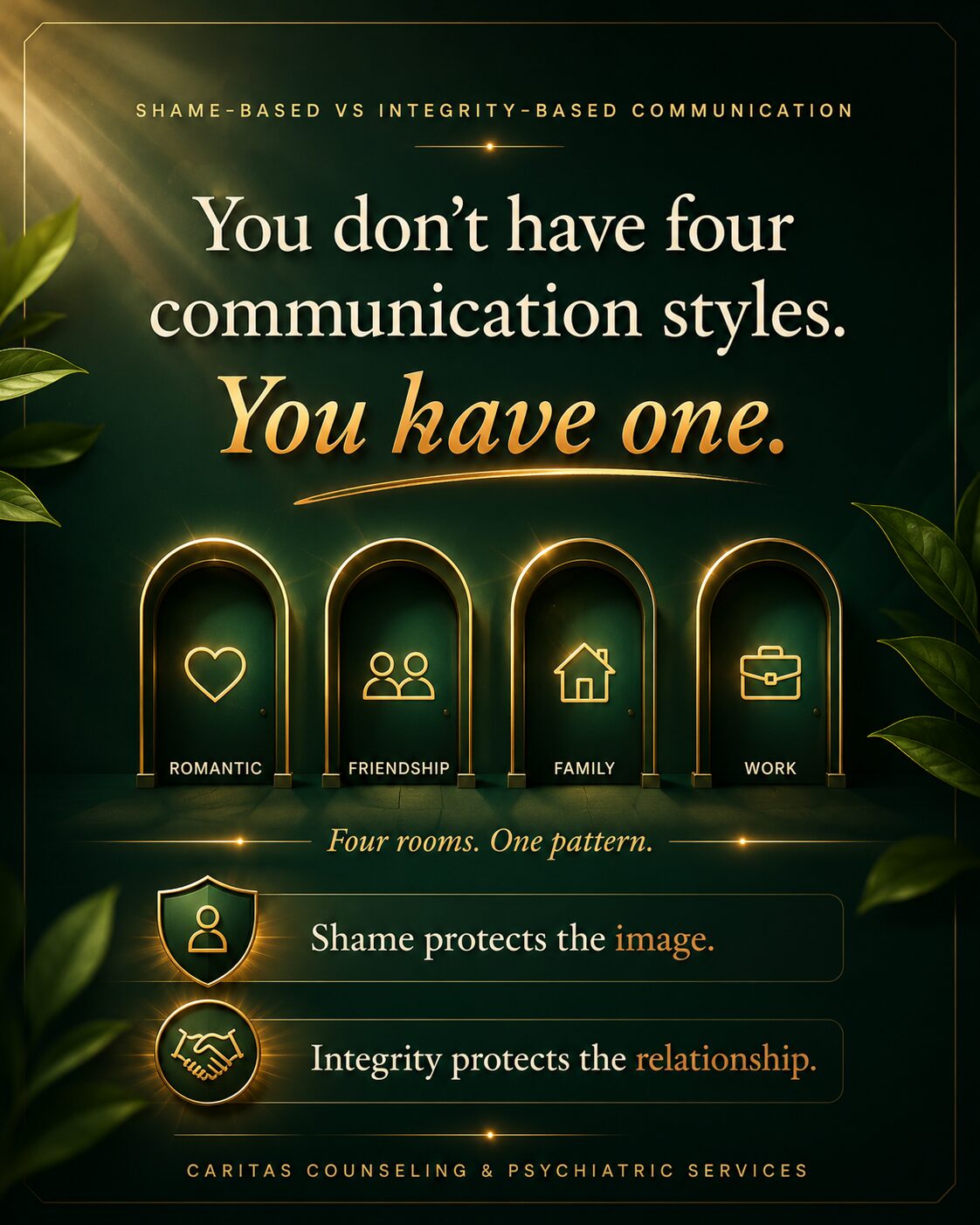
We say it casually. I am a private person. I am not good at apologizing. I have always had a temper. I do not do vulnerability. We say it the way we describe the weather, as something fixed and external that we simply have to live under and expect others in our lives to tolerate the conditions too. The culture hands us this script constantly. People do not change. You are who you are. Personality as destiny. And it is a comfortable script, because it asks nothing of us. Zero Accountability. It excuses us from the frightening work of becoming someone who repairs, who apologizes, who stays in the room when leaving would be easier.
There is a second version aimed at grief itself. It promises that grief comes in five tidy stages, that you reach closure, that you move on, that time alone heals and the goal is to stop hurting on a reasonable schedule. This is the machinery of a culture that is profoundly uncomfortable with sorrow and would like it handled quietly and quickly. Grief does not work that way, and pretending it does just layers shame on top of the pain.
Both versions do the same job. They tell us our patterns are fixed and our work is finished, when neither is true.
How hard it actually is
I do not say this as though repair were simple and we are all just being lazy. The difficulty is real, and it is ancient. René Girard spent a career showing that human conflict carries a gravitational pull toward rivalry and escalation rather than resolution. We learn what to want by watching one another want it, and then we compete for the same things, and the competition quietly turns the people closest to us into rivals. Left to run on its own, the pattern does not bend toward repair. It bends toward blame, toward finding someone to carry the fault so the rest of us can feel resolved. Girard was describing something structural, something that runs through families and through whole nations.
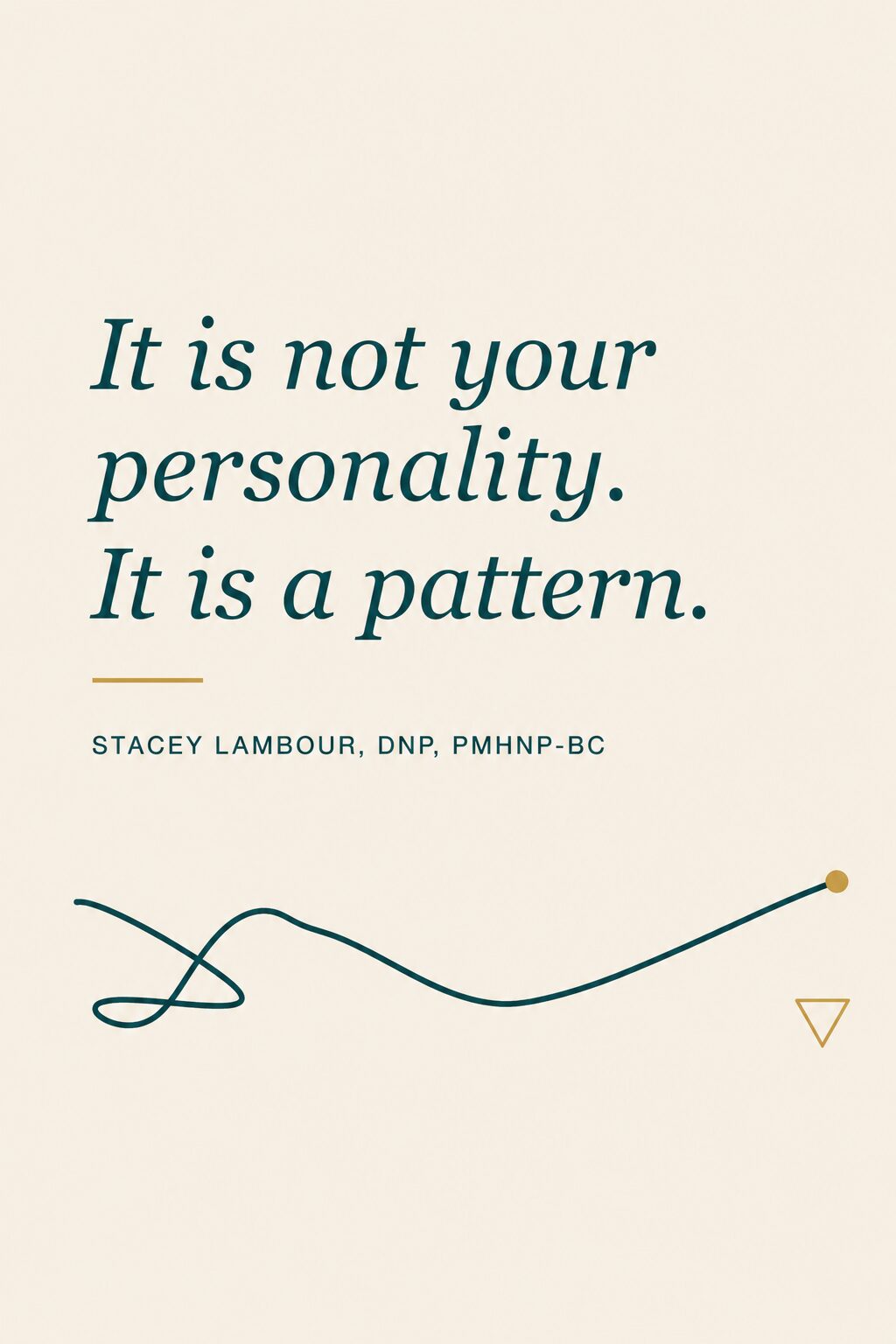
Attachment research and family systems work arrive at the same difficulty from another direction. We inherit our ways of handling closeness and conflict from the homes we grew up in, and we pass them down without ever deciding to. So when I say that humans are not naturally skilled at conflict and repair, I am not insulting anyone. I am describing a real and old and collective inheritance. It is not a character flaw. It is a learned pattern, and most of us learned it long before we had any say in the matter.
The work Caritas actually asks for
This is where caritas comes in, because caritas is not a feeling that shows up on its own. It is love practiced as a discipline, love as something you do on purpose, especially when it is hard. The framework I work from rests on three movements, and grief is where their absence shows up most painfully.
Awareness asks us to see the pattern honestly. To notice how we actually show up in our closest relationships rather than how we prefer to imagine we do. To see the blind spots, the places we arrive defended, the repairs we keep postponing for a someday that we assume will always be there.
Accountability asks us to own our part without reaching for the exit. It is the refusal to use “this is just who I am” as a way out of the work. It is the willingness to say instead: this is how I have been, it has cost the people I love, and I can do differently.
Attunement asks us to actually be present, with ourselves first and then with each other. To stay in the room. To make the repair while the person is still alive to repair with.
The promise underneath all three is plain. The grief at the bedside does not have to be complicated. Love well while there is still time, and what is left when they go can be clean. It can be only grief.
We can learn to love differently
This is what I most want you to take away for this post. These are habits. They were conditioned into us, learned from our families and our culture and the long human inheritance Girard traced. And anything that was learned can be relearned. We change relational patterns the same way we learn any other skill, through practice and repetition, through showing up and getting it wrong and trying again. It is not fast and it is not comfortable, but it is entirely possible, and we have far more evidence that people change than the culture is willing to admit.
Telling ourselves it is simply who we are is not humility. It is avoidance. And the cost of that avoidance is not small, because the way we love never stays contained. It shapes our marriages, our children, the way an entire family will one day grieve around a bed.
So much human suffering is made by human hands and is not necessary. We built it, which means we can take it apart. The tangle in our grief, the rivalry in our homes, the repairs we kept meaning to get to, none of it is fixed law. It is the residue of patterns, and patterns can be changed.
That change asks one thing of us first, and it is the hardest thing of all. It asks us to believe that we are capable of being different, and worthy of the effort it takes to develop into that person. To believe we can learn to love better, that the people we love are worth learning for, and that we ourselves are worth it too. That belief is not pride or arrogance. It is courage. And it is the foundation for growth.