Table of Contents
There have been many voices throughout history—prophets, poets, philosophers, revolutionaries—who’ve tried to wake us from our spiritual sleep. But few have done it with the gentleness, rhythm, and radiant conviction of Bob Marley. He was not just a musician; he was a messenger. A prophet of peace. A priest of freedom.
His words danced through the air like sunlight on water—effortless, contagious, and deeply human. In Redemption Song, Marley sang a lyric that has followed me through many seasons of life:
“Emancipate yourselves from mental slavery; none but ourselves can free our minds.”
To me, this is not merely a political or cultural call—it is a spiritual one.
It is a call to awaken from the tyranny of ego, to dissolve the illusions that divide us, and to remember the sacred truth pulsing beneath it all: we are made of love, we are meant for love, and we are here to live it—devotionally.
The Universal Hunger for Meaning
Despite our apparent differences, human beings are inherently spiritual creatures. Whether through scripture, poetry, or philosophy, we long to make sense of our lives and our suffering. We seek to connect, to belong, and to live in a way that aligns with something greater than ourselves.
Even atheistic philosophers like Camus, Sartre, Russell, and Nagel wrestled with this longing. In their own ways, they pointed to a deep moral intuition—a yearning for connection, purpose, and inner freedom that exists even in the absence of the divine.
The mystics and sages across spiritual traditions point to the same thing:
In Bhakti yoga, love becomes a path of devotion, and the ego is released in service to the Divine.
In Buddhism, loving-kindness (metta) is a daily practice—awakening not just to truth, but to tenderness.
The Abrahamic faiths—Judaism, Christianity, and Islam—though distinct in form, all call their followers to love God and love others. To treat others as sacred reflections of the One.
In essence, love is the thread that weaves through all true teachings.
Love is the higher law.
And yet… we so often forget.
Why Do We Forget?
Why is it so difficult for us to live in harmony when most moral frameworks already teach it?
The answer lies in our ancient nervous systems and the instinctual pull of group belonging. From an evolutionary lens, safety meant attachment to a tribe. Being accepted—being in—was survival. But with that tribal attachment came a shadow: the “out-group” was seen as a threat.
Fast forward to today, and the remnants of this primal fear still live in our minds and behaviors. We’ve simply replaced old tribes with new identities—politics, ideologies, labels, roles, beliefs. And in doing so, we’ve created more separation. More “us vs. them.” More walls and fewer bridges.
And we’ve paid the price.
We are more anxious. More divided. More afraid of one another.
We are so over-identified with our groupings that we forget our first identity—our most sacred belonging:
We are human.
The Soul’s True Identity
You are not your politics.
You are not your profession.
You are not your religion, your trauma, or even your past.
These are chapters in the story, but they are not the soul.
The soul is made of something older, something truer. The soul is love.
And when we live from soul, we live in remembrance. We see the sacred in ourselves, and we cannot help but see it in others.
To free ourselves from internal slavery is to strip away the illusion of separation—between self and other, between self and Spirit. It is to remember that every being, no matter how lost, once came from love and can return to it.
That return is the revolution.
A New Kind of Revolution
Bob Marley didn’t fight with weapons—he disarmed with melody. He healed with rhythm. He reminded us, again and again, that the answer was love.
But make no mistake: love is not passive.
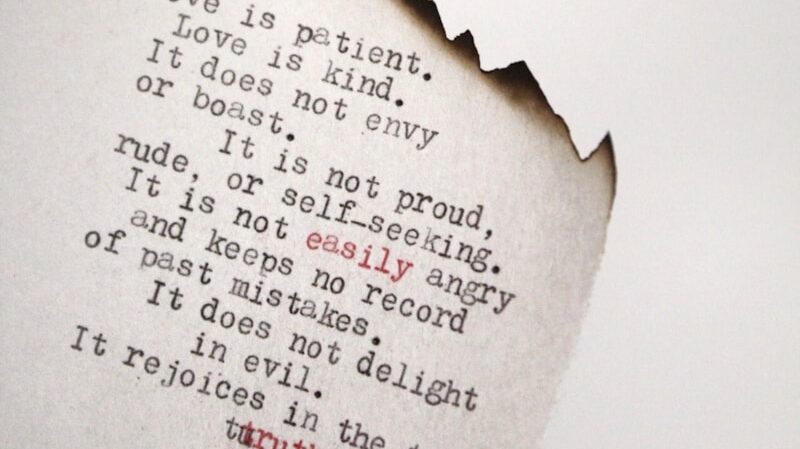
Love is a devotional way of being.
It is both tenderness and courage.
It is the daily choice to look beyond fear, beyond ego, and into the eyes of the divine in every human being.
Love does not require us to agree with everyone. But it does ask us to treat them with dignity.
Love does not ask us to erase our boundaries. But it does call us to build them with compassion.
Love does not always feel easy. But it is always worth it.
We are being invited—again—to remember.
Come Back to Love
The world doesn’t need more opinions. It needs more heart.
It needs those willing to live love as a path, as a practice, as a promise.
Let’s start a new revolution—not one of force, but of remembrance.
Let us walk back home to the truth:
We belong to each other.
We belong to love.
Let that belonging guide your choices.
Let it soften your anger.
Let it widen your circle.
Let it begin with you.